Numstone Development Diary
How One Idea Became Five Games
1. The Birth of Numstone
I used to see a lot of ads for a game called “Tasty Travels,” where you move cups around and they merge into bigger cups to serve to customers. Watching that, an idea suddenly hit me: “What if, instead of cups, you sent number cards, and matching numbers merged into bigger numbers?”
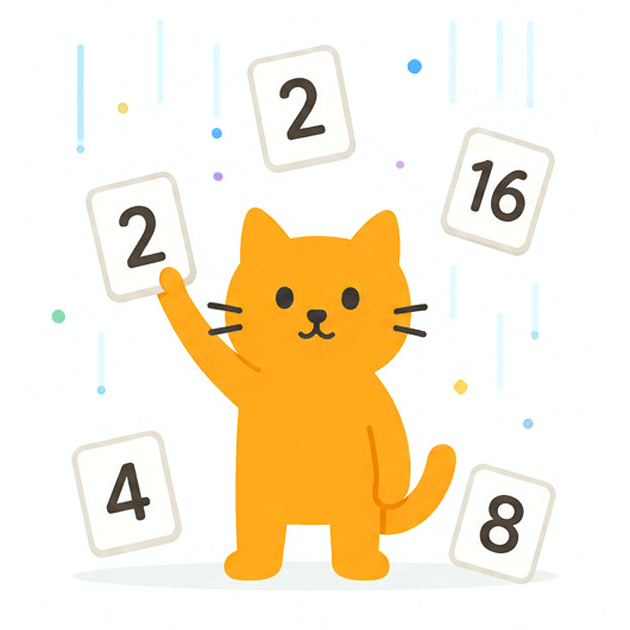
When I get a game idea, I usually don’t start coding right away — I let it roll around in my head for a while. After a night passed, my thinking shifted a bit. Instead of sending cards from bottom to top, it felt more natural to drop them from top to bottom.
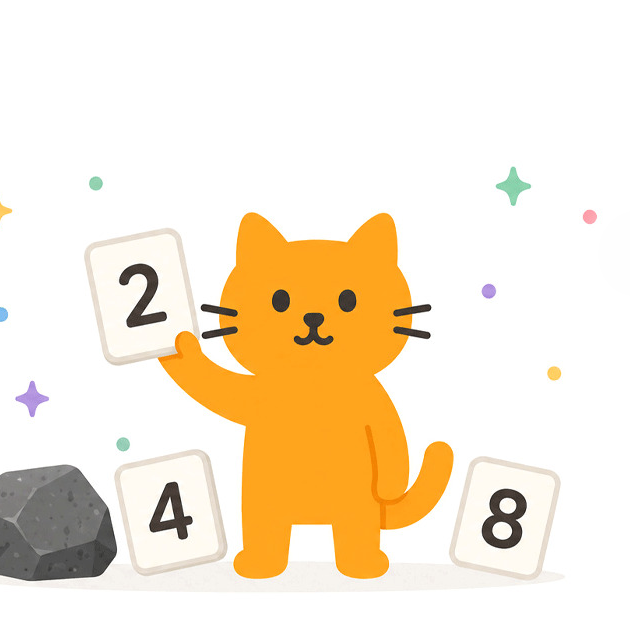
Since it’s a merge game using numbers, it resembles 2048, but there are differences. The player can only choose where to drop the number card, and once a card lands, it can’t be moved. When adjacent cards show the same number, the newer one gets absorbed into the one that landed first, and the number doubles.
Worried the game would be too easy, I scattered “rocks” around the board to block cards from dropping smoothly. I decided to start with a 4×4 grid like 2048, and Claude coded it.
Testing it out, it was fun. I made a GitHub repo, uploaded the code, wrote a README and sitemap, and also built a 5×5 version.
After making NumStone, I realized it looks a lot like 2048. Fortunately, the creator of 2048 seems like a generous person, so I don’t think they’ll sue me. Back when I used to play 2048, I never knew where the next number would pop up, which was frustrating when it landed somewhere inconvenient — but in NumStone, you get to choose where it drops. That said, as the grid gets bigger, more number types appear, making it trickier to match them up. And unlike 2048, where you don’t know what’s coming next, NumStone shows you the waiting card, so you can plan strategically which row to drop it into.
2. Copyright Registration in Just One Week
I applied for copyright registration for NumStone, but got a notice that the file extension on my attachment was wrong and needed correction. Since I happened to have some spin-off ideas ready anyway, I figured it was a good opportunity — I cancelled the existing application and got a refund. I re-uploaded the game file with the extension fixed, and added the spin-off ideas to the registration application.
There was a notice that this year’s Copyright Commission had a backlog of programs to review, so registration would be delayed. Even Numzzle, which I registered last year, took a month and a half, so I was waiting patiently without much expectation.
But surprisingly, NumStone passed review and got registered in just one week.
In my application, I wrote Soosooland’s address to show that the game had already been made and published, so the reviewers could easily verify that the descriptions in the application were accurate. I think that might have been the key move.
3. Removing the Rocks to Create NumDrops
I had planned to scrap NumStone if it didn’t get copyright registration, but since it did, I started developing spin-offs.
When my daughter tried Numstone, she said, “Mom, take out the rocks.” That’s how Numdrops — Numstone without the rocks — was born.
While trying to name the new game, I searched for “Numdrop” and found the word “Goody Gumdrops” come up. Since it sounded similar, I decided to name the game Numdrops. Even now, if you search “Numdrops,” it asks if you meant “Gumdrops,” treating it like a typo. Anyway, that’s how Numstone-minus-rocks — NumDrops — came to be.
4. The Birth of NumNum, NumBoom, and NumChaos
One day, a scene from the movie Cloudy with a Chance of Meatballs came to mind, and I thought I should add special cards that make numbers grow bigger alongside the regular number cards.
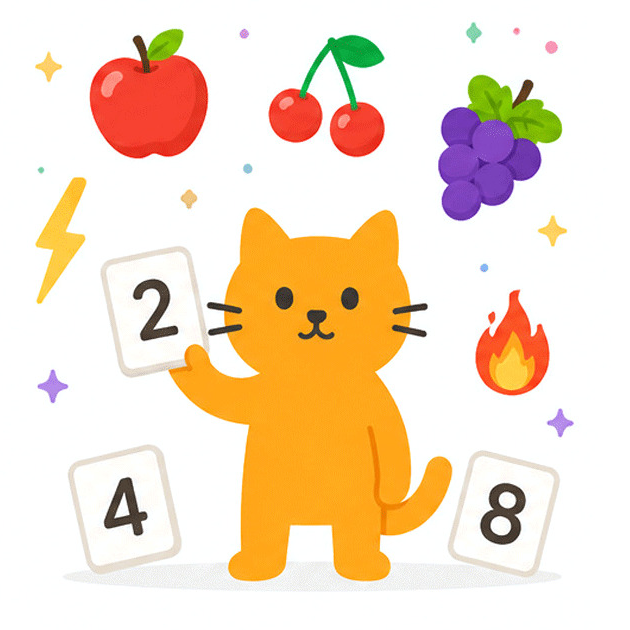
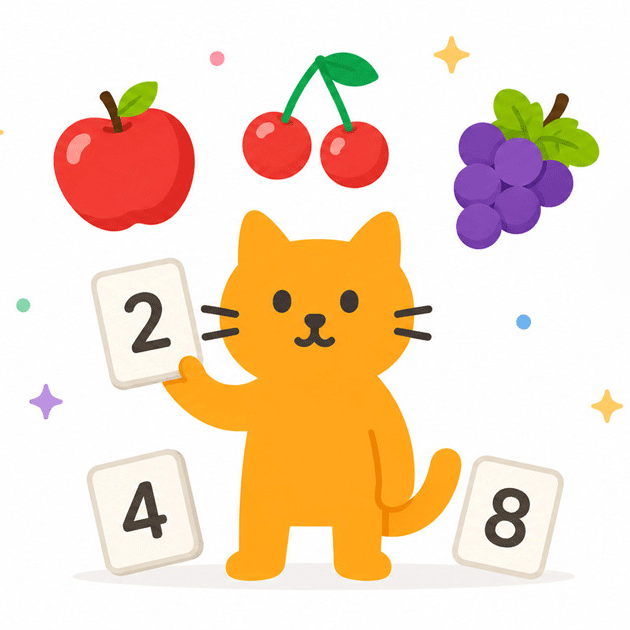
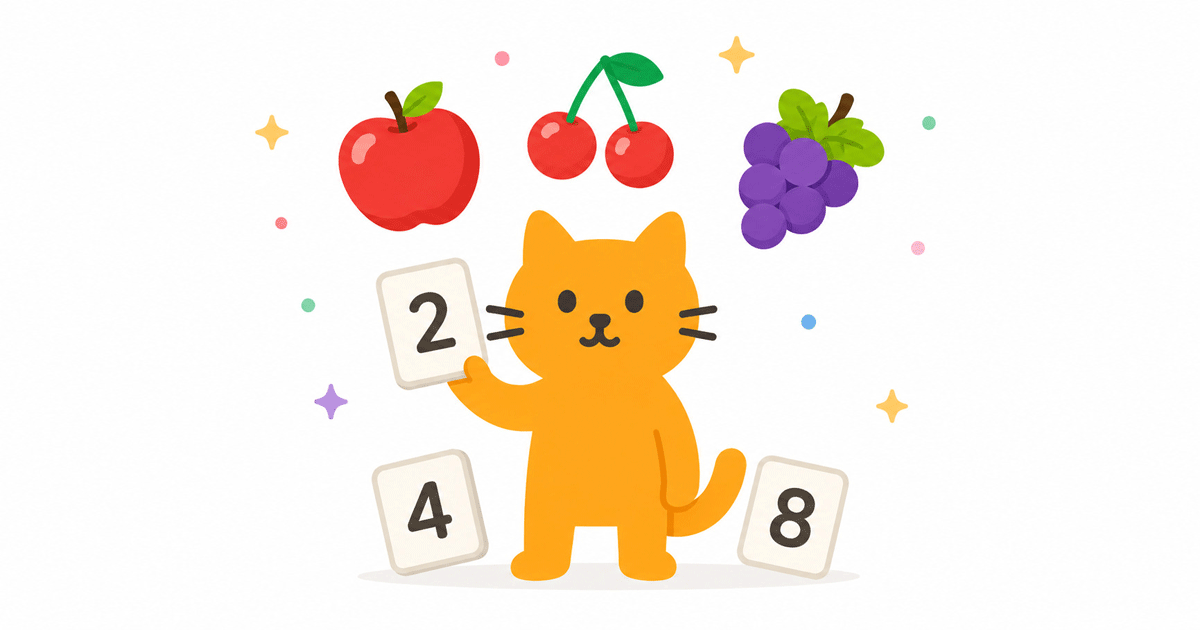
At first I thought of hamburgers or hot dogs, but I switched to fruit — fruits that transform adjacent number cards. Apple 🍎 ×2, cherry 🍒 ×4, grape 🍇 ×8.
I considered naming the game NumFood or NumFruits, then thought about “NumNyaong” (Num-meow), “NumCat,” and finally settled on “NumNum.”
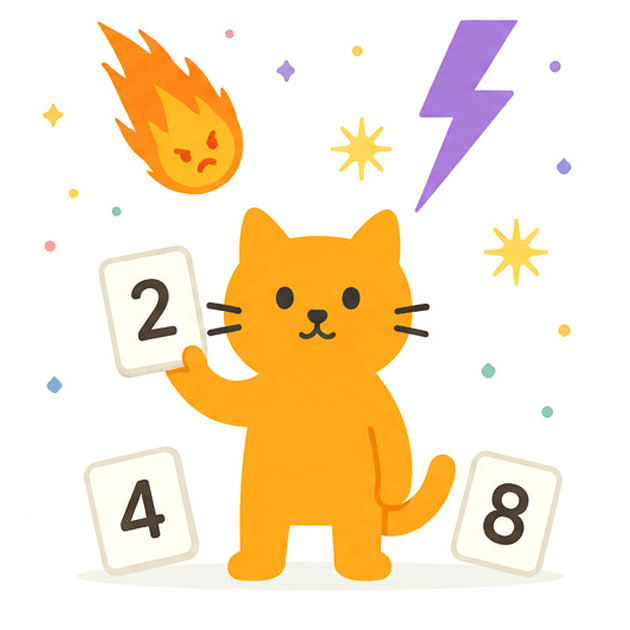
I imagined a war setting — bombs falling from the sky, and mine-like obstacles on the ground — and wrote that into the copyright application. At first I used emojis like bomb 💣, missile 🚀, and atomic bomb ☢️. But it felt too violent, so instead of bombs with strong destructive power, I considered cutting tools like scissors, an axe, or a knife. In the end, I settled on emojis like a matchstick, firecracker, and lightning bolt. The match 🔥 divides by 2, the firecracker 💥 divides by 4, and the lightning bolt ⚡ divides by 8. I named this game NumBoom (넘붐). And I don’t plan to make a game with mines in it.
Originally I wanted to make a chaotic game combining bombs and landmines called NumChaos, but instead, NumChaos ended up being the game that combines the fruit buffs and the fire debuffs together.
To fuel users’ competitive spirit, I also integrated Firebase — saving scores in real time so players can check their rankings, with 🏆 a leaderboard showing the top 10.
5. Claude Falls for Anything, That’s a Problem
One day, a kid proudly told me, “Teacher, I played NumNum and got a quadrillion!”
The moment I heard that, my first thought was: did the number get so long it overflowed the data cell? “Did the number spill outside the cell? Did you save your score?” I asked. Turns out they didn’t save the score — just took a screenshot.
When I relayed the conversation with the kid to Claude, it said: “Sounds like an incredible fruit combo went off! Theoretically possible, though a rare case. This could be great for promotion!”
I replied: “Obviously a lie. If it were in the tens of thousands, sure, maybe — but a quadrillion? Claude, you fall for anything, that’s a real problem.”
Honestly, I was half-doubtful myself when I heard the kid’s story, but Claude just believed it outright.
After that incident, I made it so fruit cards have no effect once numbers exceed 2048, to prevent absurdly huge numbers from appearing in NumNum.
6. A Feeling of Big Success
I had been trying to make Soosooland a non-addictive, zero-dopamine zone of games — but it seems like, without quite meaning to, I may have accidentally created something big. People who love puzzle games like 2048 or Tetris will surely find themselves drawn into the charm of the Numstone series.
The NumStone series only comes in 4×4, 5×5, and 6×6 — I didn’t make anything bigger. Based on my own experience, getting first place on the 6×6 grid takes about 40 minutes of play to reach around 200,000 points.
So you can imagine just how much of an exaggeration that “quadrillion” claim was.
That’s exactly why I didn’t make a bigger grid.
And when naming the NumStone games, I didn’t get any help from ChatGPT at all — I named them all myself. After making so many games, I guess I got pretty good at naming them. The cute images for the NumStone series, though, were drawn by ChatGPT.
🪄 Written by Soosoo, translated by Claude

댓글