Numzzle Devlog: part 2
Numzzle Dev Log #2 – The Honor Student NPC and Transformative Teal
1. Numzzle’s Basic Structure
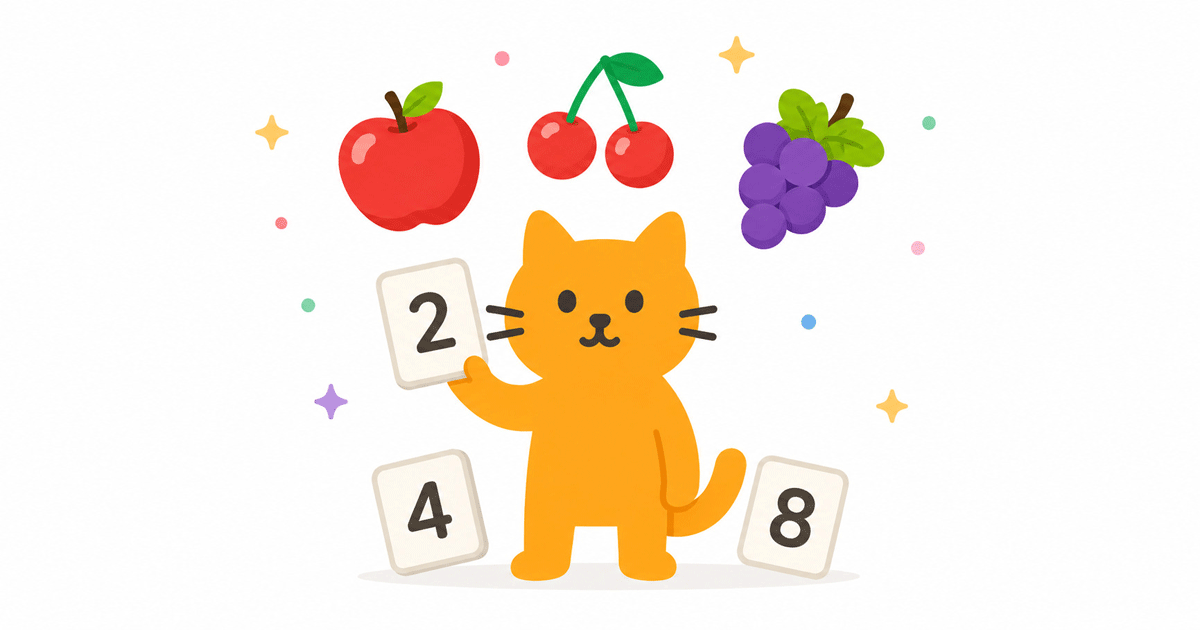
Numzzle started with 5 number cards and 4 arithmetic operators — addition, subtraction, multiplication, and division. Two number cards could be combined to form a 2-digit number. Players earned points simply by building an expression closest to the target number, and a mistake log at the bottom kept score.2. The Birth of the Honor Student NPC
I figured it was too lonely to study alone, so instead of an honor-student friend, I brought in an NPC.The number of possible expressions from the cards was enormous, and making the NPC smart enough was a brutal process. Though I feel a bit bad saying it that way — it’s really because I can’t code, so I kept pestering Claude with requests like “The NPC needs to be smarter,” “It should be able to form 2-digit numbers,” “Right now it only uses some of the cards — it needs to use all of them,” and “Let’s only accept up to two decimal places.” Thanks to all that nagging, Numzzle’s NPC became incredibly smart.
3. Practice Mode and Battle Mode
Since the NPC always finds the correct answer, it scores a perfect 100 over 10 rounds (10 points per round), while the player loses points every time their answer differs from the NPC’s.So I created a Battle Mode where the player and NPC receive different cards — giving the player at least a fighting chance based on luck.
Currently, Numzzle has two modes: Practice Mode, where both the player and NPC receive the same cards, and Battle Mode, where they receive different cards. In Battle Mode, scoring is based on the difference from the target number. If both are equally close, each gets 10 points; if not, only the one who gets closer earns the 10 points.
June 5, 2025 — The first prototype was completed and uploaded to the /numzzle repository.
4. The Numzzle Series — Jam, Cho, Up
Even with my architectural engineering background, scoring 100 in Numzzle wasn’t easy. So I created Numzzle Jam — a version tailored to my own level, with division removed and fewer cards.Then I made Numzzle Cho so that lower elementary school students could play too, with pictures on the cards and only addition and subtraction. Originally, I planned to put images on the number cards — one apple on the 1 card, two peaches on the 2 card, and so on. But Numzzle Cho doesn’t allow 2-digit combinations, and its number cards go up to 20. That meant drawing 20 monkeys on the card for 20. The cards were getting impossibly large, so after much deliberation, I put finger emojis instead. The honor-student NPC’s cards, of course, have no fingers. ☝️✌️🤟✋
Later, I got ambitious and built Numzzle Up, which requires a calculator with π and √ to even stand a chance. Making the NPC smart enough for that one was incredibly hard. Not for me — for Claude.
So the /numzzle repository now holds Numzzle, Numzzle Jam, Numzzle Cho, and Numzzle Up, all from the start.
5. Transformative Teal — Finding a Design Identity
I wanted all my games to share a recognizable look — something that would make people think, “Oh, this is one of hers.” The games themselves couldn’t be made uniform, so I decided to unify the design.I thought about using colors inspired by an idol music video I’d watched — students in school uniforms walking home at night, all night-sky blues and neon signs — but it never came out the way I imagined. Then I tried picking popular color palettes from Color Hunt, but I kept second-guessing myself. I looked up Pantone’s Color of the Year and wasn’t drawn to the chocolate brown. Then I came across the 2026 color selected by trend forecasters WGSN and Coloro: “Transformative Teal.” I thought: even if I get tired of it, I can hold on for a year. So I went with teal and did a full redesign.
July 5, 2025 — The design was completely overhauled with a teal theme and overwritten to the same repository. The original Numzzle had been responsive, but the new Transformative Teal design lacked responsive support, causing UI breakage on mobile.




댓글